
 ADMISSIONS OPEN • For the Academic Year 2027-28
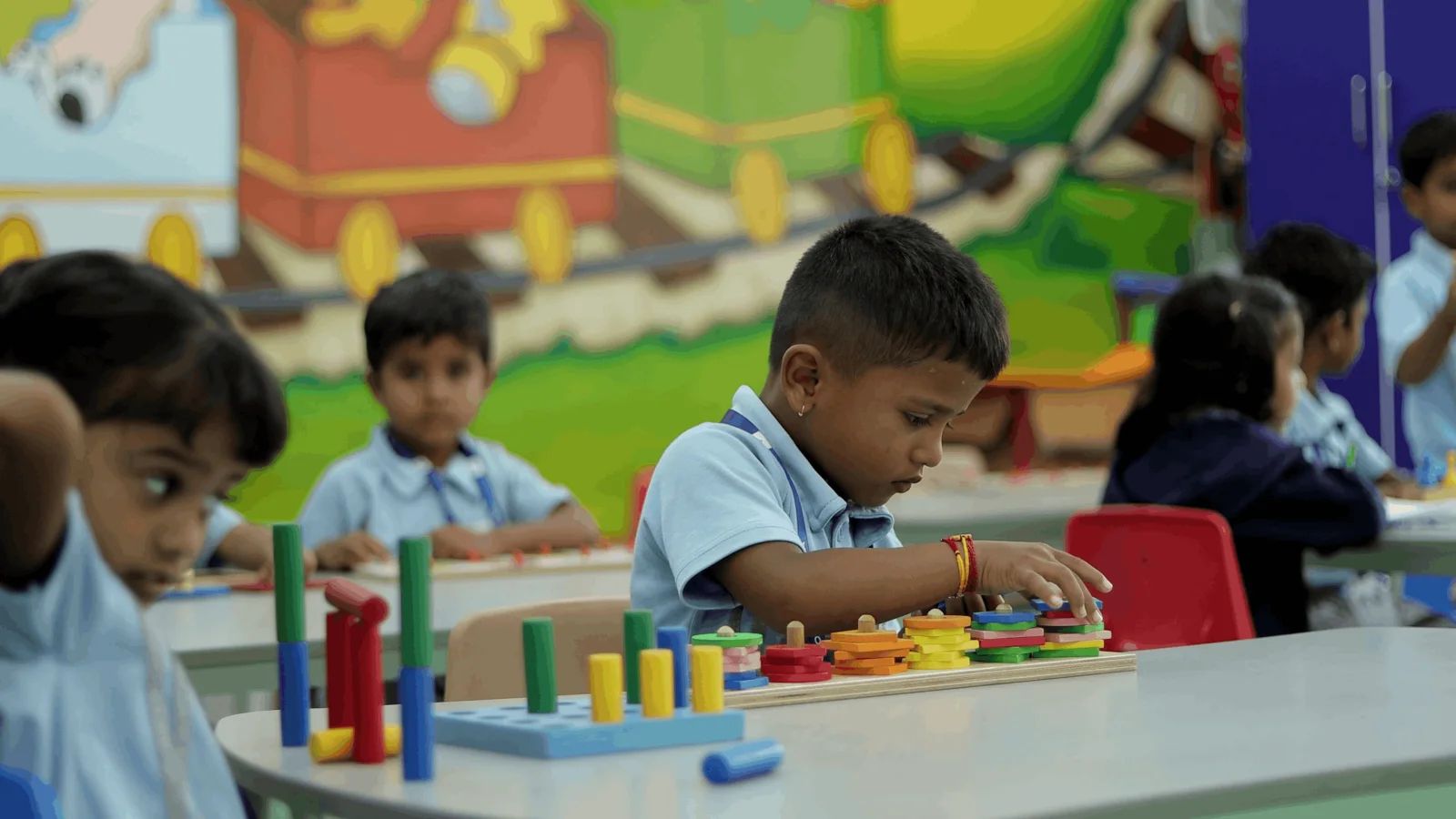
Every parent wants to know one thing above all else: is my child actually growing — academically, socially, emotionally — or just moving through a syllabus? At Koshys Global Academia (KGA), a co-ed CBSE school on Hennur Bagalur Road, North Bangalore, that question shapes how we design learning itself. Here's how activity-based learning at a CBSE school in Bangalore supports real, measurable growth in young children.
Confidence — through presentations, group projects, and low-stakes opportunities to be wrong and try again
Collaboration — co-ed classrooms naturally teach children to work alongside peers of different temperaments, not just similar ones
Curiosity — activity-based formats reward asking "why," not just answering "what"
Resilience — hands-on tasks that don't work the first time teach children to iterate, not give up
What Is Activity-Based Learning, and Why Does It Matter?
Activity-based learning replaces passive listening with doing - building, experimenting, discussing, creating. For a CBSE school in North Bangalore, this means the same syllabus is delivered very differently: a science concept becomes a hands-on experiment, a language lesson becomes a group storytelling exercise, a maths topic becomes a puzzle solved in teams.
Research consistently shows that children retain concepts better and develop stronger problem-solving skills when they engage physically and socially with material, rather than memorising it. For an English medium CBSE school in Bangalore, where students are also building fluency in a second language, this active approach helps concepts stick in a way rote learning simply doesn't.